|
- cap. Asraul 1hs and Abresham pills 1bd use in minimum 30 patients and got 100% results with in 1 day...
dr.ramniwas singh gora
- I recieved the product today, 2-3 days earlier than expected by me. It was a prompt, quick and wonde...
Sujit V Jadhav, Solapur
- Hearty congratulation for maintaining the quality assurance of unani medicine and keeping the touch ...
Dr. Syed Mohammad Salman
- i have used Arq Shahtara in minimum 10 patients of chronic non specific otoria and got 100% results ...
dr.ramniwas singh gora
- You are promoting the unani system of medicine on international level by all efforts with scientific...
Dr. Ashaq Munshi
- Your products are really very effective and I appreciate your fruitful effort towards popularising U...
Dr. IDRIS MODI, BHOPAL, M.P
- Ur products have shown good results in various ailments especially Dabidulward Capsules in gynaecolo...
Dr Aasiy ul Erum
- dear mohsin bhai,
pls make piaz caps. if possible as made by none till now. it will have a hug...
burhanuddin z k
- dear mohsin sir,
since you have done many great things(one of a kind, by launching capsules) whi...
burhanuddin .z. k.(alternative med. practioner), b.a.s.m, d.pharm. shifa medical, jogeshwari, mumbai
- Masha Allah !!!! The webpage and Facebook account of Dehlvi naturals contains all the required info...
Dr. Salman Rashid
- there is a trust of mine in dehlvi products.its works excellently thats why i love to prescribe dehl...
Hkm.Imran Khan-Dr.Khan Unani Speciality Clinic,baheri,bareilly.
- I have seen your website first time on faculty of unani medicine group.
Thanx 4 a link,
I cong8 u...
Dr. Abu xaigham khan
- Your website contains information based on latest research in biotechnology and medicine. I apprecia...
Mohammed Aslam
- I pray Allmighty ALLAH for the prosperity and attaining more hights,you must be congratulated for in...
Dr. Shariq Ali Khan
- Dehlvi Naturals is doing a quality work. Hope it is maintained and improved further.
Prof. Dr. Sharique Zafar, Mumbai
- Dehlvi Naturals is doing a commendable job in creating awareness among Unani professionals across th...
Dr Abdul Kabir Dar, Director ISM, J&K
- The products of Dehlvi Naturals are reliable. I prescribe Dehlvi products 4 my pts 4 good result. Pl...
Dr.Hifzur Rahman, Dr. Abdul Ali Tibbiya College & Hospital, Katauli, Malihabad, Lko
- It took me 30 minutes to search for Dehlvis instant joshanda in the market but got relieved in 10 mi...
Dr Gulzar Bhat, Pulwama, Kashmir
- First time seen your website and found it quiet informative. You have come up with attracting prese...
Dr Bano Shamshad
- I appreciate that you have changed the tradition. You must insist on making new medicines like for g...
shahnawaz
- You people have come up with excellent medicines with high levels of efficacy. Hope you guys will co...
Dr Ehtesham Khuroo
- congrats Mohsin bhai and wish u good luck for ur bright future........I also believe in unani medici...
Farha Khan
- Your Majun Aqrab's result is too fast. Rocks with Sharbat Aaloo Baloo, result is so fast.
Dr. Aadam
- Your joshanda rocks!
Dr.Amina Ather
- Your medicines Safuf Bars and Neem Capsules are very effective against Vitiligo.
V.D. Vaidya
- Website is Adventurous and Amazing site with complete and well organized information displayed.
Ke...
Dr Saifulla Khalid Adamji
- you guys make excellent products and truly servicing humanity.From sharbats to mediines for common a...
siddharth
- A number of products like prostate-bh, pylčena, etc are result oriented but they should come in stri...
Dr Gulzar Bhat, Kashmir
- The information and detail provided here at this website is really amazing and i must say golden wor...
Mehboob Alam
- Dehlvi Naturals Website contains very organised collection of unani literature & classical unani for...
Dr.Salman Rashid
- I really appreciate your range of diverse and innovative products, which are an excellent option for...
Ibaad, Kuwait
- I like to recommend you to check in detail the opportunity to supply medication in Middle East count...
Dr. Shabeer Ahamed Roy
- I have tried you Prostate-BH it proved really excellent. Cant we name it in Unani.
Dr Younis Munshi, Srinagar
- Time demands a change, Those who don,t change for better are lost in present and become past. So we ...
Dr Syed Tasaduq Geelani, Kashmir
- i have asked the students to get info on single drugs from your link ,i think they do not have to re...
Dr Amina Ather, Bangalore
- I m sure u will forward yr Family's name & tradition , far & wide, over the world., under the banner...
Afzal Ali Shah, Lucknow
- I would like to thank you from the bottom of my heart for SkinClear Capsules that you sent. Almost 8...
Ms S. Hameed
- I pray Dehlvi Naturals to attain heights which will be unimaginable for all the competitors. With Mo...
Dr Wahid ul Hassan
- We should thank u for the tremendous work u r doing......I really adore u and may Allah help u in al...
Dr Wahid Ul Hassan, Kashmir
- May Almighty bless u mohsin bhai. U and ur organisation is really giving a new life to UNANI system....
Dr Syed Tasaduq Geelani, Srinagar
- Congrats.
Dr Altaf Hussain, Pulwama
- Good going. Keep it up. Let this be the Dehlvi Internationals now..
Dr Younis Munshi, Srinagar
- Wishing you all sucess in your venture to Malaysia.
Dr Roohi Zaman, Bangalore
- Congrats Mohsin Bhai!
Dr Mohammad Aslam Khan, Mumbai
- Congrats and wish u good luck for ur future.
Dr Irfan Banday, Kashmir
- Congrts Mr Mohsin..
Dr Aftab Alam, Banda
- Interesting..never got a chance to visit ur booth as we were busy preparing for our conference paper...
Dr Harpreet K Gill, Malaysia
- Keep it up Dehlvi Naturals. Our prayers are with u.
Dr Wahid Ul Hassan, Kashmir
- Congrats for keeping "flag" high everywhere, "bravo" for meet in "Malaysia" ....it could be only moh...
Dr Rewari Rakesh
- Very informative website.
Dr Ismaeel Khan, New Delhi
- Your herbal products are very effective. I give the advice to my patients to use them.
Dr Mozzam Rasheed, Saharanpur
- Alhamdulillah 'Dehlvi Products" are very effective & I advice my patients to purchase all my prescri...
Dr Salman Rashid, Luknow
- Positive approach towards mordernisation.
Dr Suleman Khan, Mumbai
- Keep up the good work that your Grand-Father started.
Hakim Anwar Ahmed, Delhi (Physician to the Ex-President of India)
- Ur medicine are good quality keep it up....
Dr. Syed S. Anisuddin, Krishnagiri
- Unani Capsule range is very innovative. Need of the hour. Keep it up.
Hakim Ajmal Khan, Mumbai
|
| read more.. |
 |
 |
|
Sindh Healthcare Sdn Bhd
22-1, Jalan MP-10, Taman Merdeka Permai
75350 Melaka, Malaysia
Email: info@sindhhealth.com
Phone: +606 334 6294
Mobile :
+ +6012 713 9671.
Email :
mir@sindhhealth.com
|
 |
|
Herbalism |
|
|
| |
| |
UNANI HERBAL SUPPLEMENTS - AN INTRODUCTION |


 |
History
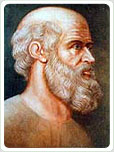
The Unani system of Herbal Supplements owes, as its name suggests, its origin to Greece. The term ‘UNANI’ is derived from the word ‘UNAN’ which means Greece in Arabic. It was the work of the Greek philosopher-physician Hippocrates {Buqrat In Arabic} (460-377 B.C.), who freed Herbal Supplements from the realm of superstition and magic and gave it the status of science. He considered illness to be natural rather than a supernatural phenomenon, and he felt that Herbal Supplements should be administered without ritual ceremonies or magic. The theoretical framework of Unani Herbal Supplements is based on the teachings of Hippocrates. By his method of careful study and comparison of symptoms, he laid the foundation for clinical Herbal Supplements.
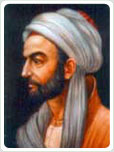
After Hippocrates a number of other Greek scholars enriched the system considerably. Of them Galen {Jalinus in Arabic} (131-200 A.D.) stands out as the one who established its foundation on which Arab physicians like Rhazes {Al-Razi in Arabic} (850-932 A.D.) and Avicenna {Ibn-Sena in Arabic} (980-1037 A.D.) constructed an imposing edifice. Galen introduced and practiced the Unani system of Herbal Supplements in pre-Islamic Egypt, serving as Royal court physician to the King of Egypt and under his patronage, researched, experimented and developed hundreds of new Herbal Supplements and cures for almost all types of diseases.
Imbibing what was best in the contemporary systems of traditional Herbal Supplements in Egypt, Syria, Iraq, Persia, India, China and other Middle East and Far East countries enriched the Unani system. That is why this system is known, in different parts of the world, with different names such as Greco-Arab Herbal Supplements, Ionian Herbal Supplements, Arab Herbal Supplements, Islamic Herbal Supplements, Traditional Herbal Supplements, Oriental Herbal Supplements, etc.
|

 |
In India
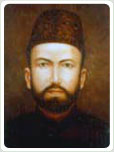
In India, Unani system of Herbal Supplements was introduced by the Arabs and soon took firm roots in the soil. When Mongols ravaged Persian and Central Asian cities, scholars and physicians of Unani Herbal Supplements fled to India. The Delhi Sultans, the Khiljis, the Tughlaqs and the Mughal Emperors provided state patronage to the scholars and even enrolled some as state employees and court physicians. During 13th and 17th century A.D. Unani Herbal Supplements had its heyday in India. During the British rule Unani system of Herbal Supplements suffered a setback due to withdrawal of State patronage, but continued to be practised as the masses reposed faith in the system. An outstanding physician and scholar of Unani Herbal Supplements, Hakim Ajmal Khan (1868 - 1927), championed the cause of the system in India. The Unani system got a further boost in India when Janab Hafiz Mohammed Yusuf Dehlvi took over Bara Dawakhana in 1956 and started manufacturing quality Herbal Supplements.
|
Fundamentals
According to the principles and philosophy of Unani Herbal Supplements, disease is a natural process, its symptoms are the reaction of the body to the disease, and the chief function of the physician is to aid the natural forces of the theory. Unani Herbal Supplements is basically based on Humoral Theory.
The Humors (Akhlat)
The humoral theory presupposes the presence of four humors -- Dam (blood), Balgham (phlegm), Safra (yellow bile) and Sauda (black bile) -- in the body. The temperaments of persons are expressed by the words sanguine, phlegmatic, choleric and melancholic according to the preponderance in them of humors -- blood, phlegm, yellow bile and black bile, respectively. The humors themselves are assigned temperaments -- blood is hot and moist, phlegm is cold and moist, yellow bile is hot and dry, and black bile is cold and moist. Every person is supposed to have a unique humoral constitution which represents his healthy state. As long as these humors exist in normal balance, normal quantities and in the normal region of the body, the humor system will work in the normal way. Any imbalances to the humor constitutions or changes in their quantity and quality result in diseases. To maintain the correct humoral balance there is a power of self- preservation or adjustment called Quwwat-e-Mudabbira (medicatrix naturae) in the body. If this power weakens, imbalance in the humoral composition is bound to occur which causes disease. In Unani Herbal Supplements, great reliance is placed on this power. The Herbal Supplements used in this system, in fact, help the body to regain this power to an optimum level and thereby restore humoral balance, thus restoring health. Also, correct diet and digestion are considered necessary to maintain humoral balance.
Distinctive Characteristics
1. Existence of Pneumas; 2. Holistic Approach; 3. Herbal Treatment; 4. Psychological Dimensions, and 5. Qualitative Action of weather and seasonal requirement
Diagnosis
Another distinctive feature of the Unani system of Herbal Supplements is its emphasis on diagnosing a disease through Nabz (pulse), a rhythmic expansion of arteries which is felt by fingers. The reading of the pulse permits a rather straightforward assessment of several factors: 1) which humor is out of balance; 2) what is the nature of the imbalance; that is, excess of heat or coldness, wetness or dryness; and 3) which of the primary organs are effected. Other methods of diagnosis include examination of Baul (urine), Baraz (stool), etc.
Prevention of Disease
Unani system of Herbal Supplements recognises the influence of surroundings and ecological conditions on the state of health of human beings. The system aims at restoring the equilibrium of various elements and faculties of the human body. It has laid down six essential prerequisites for the prevention of diseases and places great emphasis on the maintenance of proper ecological balance and on keeping water, food and air free from pollution. These essentials, known as ‘Asbab-e-Sitta Zarooriya’, are air, food and drinks, bodily movement and repose, pyschic movement and response, sleep and wakefulness, and excretion and retention.
Types of Treatment
Unani system of Herbal Supplements has various modes of treating an ailment depending upon the nature of the ailment and its causes, such as Ilaj-bil-Tadbeer (Regimental therapy), Ilaj-bil-Ghiza (Dietotherapy), Ilaj-bil-Dawa (Pharmacotherapy) and Ilaj-bil-Yad (Surgery).
The regimental therapy includes Fasd (Venesection) -- useful for correcting the excess of blood and relieving high blood pressure, preventing toxicity and accumulation of waste matters in blood, excreting waste matters from various parts of the body, stimulating metabolic processes, curing ailments due to amenorrhoea; Mahajim (Cupping) -- useful for cleaning the skin of waste matters, stopping excessive menses or epistaxis, correcting liver diseases, treating malaria and spleen disorders, treating piles, inflammation of testes and uterus, scabies, boils etc.; Tariq (Sweating) -- this is the natural means of excretion. Waste matter from the skin, blood and from other parts of the body is excreted through sweating. It also reduces excessive heat; Hot fomentations (dry and wet) -- bathing with warm water, massaging and keeping the patient in a room having hot air are some of the methods; Idrar-e-Baul (Diuresis) -- poisonous matters, waste products and the excess of humors is excreted through urine. It is applied as a cure for diseases of heart, liver and lungs; Hamam (Turkish Bath) -- this is required for resolving the waste matters and increasing sweating, providing light heat, increasing nutrition, increasing or decreasing fat. Cold bath is preferable in normal health. Hot bath is generally applied for the cure of diseases like Paralysis and muscular wasting etc, after massage; Dalak (Massage) -- soft massage is sedative and relaxant; dry and hard massage is deobstruent and increases the blood supply while the massage with oil relaxes the muscles and softens the skin; Kai (Cauterization) -- it prevents the poison malignancy of one organ from transferring it to other organs thereby strengthening the organ having cold temperament. In the pain of hip joint cauterization is found very useful. It is also used to check the catarrhal matters from accumulation; Ishal (Purging) -- purgatives and laxatives have been widely used by the Unani physicians for intestinal evacuation in certain diseases. This method has resolving, derivative, antispasmodic and detoxicating effects; Qai (Vomiting) -- emetics are used to cure headache, migraine, tonsillitis, bronchopneumonia and also bronchial asthma. This also cures mental diseases like mania and melancholia; Riyazat (Exercise) -- physical exercise has great importance in the treatment of certain diseases, as well as in maintenance of healthy condition of an individual. It also prevents occurrence of certain diseases; and Taleeq (Leeching) -- to apply leeches is a unique method for removal of bad matter from the blood. It is useful in skin diseases i.e. baldness and ring worm etc.
In dietotherapy therapy alterations in the quality and quantity of the patient’s diet is suggested. In this, either the patient is asked to restrict his or her diet or a balanced diet is suggested for malnourished patients. The weakness of certain organs is corrected by administering the same organ of an animal by way of food; for instance, disorders and weakness of liver are treated by feeding the patient on liver. Likewise heart, kidneys and brain are administered in treating the ailments of these parts. Sometimes, the patient is even asked to forego food altogether.
In pharmacotherapy therapy drugs of natural origin are used. They may be of plant, animal or mineral origin. Single drugs as well as compound formulations in the form of Safuf (Powder), Haboob (Pills) and Qurs (Tablets), Kushtajat (Oxides), Sharbat (Syrups) and Majun, Itrefal and Khamirajat (Semi solids) are used in the treatment of various complex and chronic disorders.
Surgery is the fourth line of treatment.
Conventional (Allopathic) Vs Unani System of Herbal Supplements
Despite the dramatic advances of conventional Herbal Supplements, or bio-herbal supplements as it is also known, it is clear that herbal Herbal Supplements has much to offer. Today, herbal remedies are coming back into prominence because the efficacy of conventional Herbal Supplements such as antibiotics and cortisones, which once had near-universal effectiveness against serious infections, is on the wane and serious, even fatal, side-effects of so called “wonder drugs” are being discovered.
Herbal Supplements often complements conventional treatments, providing safe, well-tolerated remedies for chronic illness. It is experiencing a dramatic renaissance in Western countries, partly because no effective conventional treatment as yet exists for such chronic illnesses such as asthma, arthritis, irritable bowel syndrome and sexual dysfunctions. In addition, concern over the side effects of conventional Herbal Supplements is encouraging people to look for more gentle and effective forms of treatment. It is estimated that 10-20% of hospital patients in the West are there due to the side effects of conventional medical treatment. According to the late Sir William Oslar, an eminent physician and surgeon, when conventional drugs are used, the patient has to recover twice - once from the illness and once from the drug.
Plants take up substances from the earth and convert them into vitamins, minerals, carbohydrates, proteins and fats that our bodies use for nourishment and healing. By using the whole plant, we take in all the vital ingredients it carries. The Unani system of Herbal Supplements, therefore, believe in the harmonious view that “the whole plant is worth more than the sum of its parts”. When the whole plant is used rather than extracted constituents, the different parts interact producing a greater therapeutic effect than the equivalent dosage of isolated active constituents that are generally preferred in conventional (allopathic) Herbal Supplements where often a drug is over-refined and may lose some of the other components that complement or prevent side effects.
Unani Manufacture Control
The manufacture of Unani drugs is being regulated by the Government of India through the Drugs and Cosmetics Act 1940
|
|
AYURVEDIC HERBAL SUPPLEMENTS - AN INTRODUCTION |
History
“Ayurveda” literally means “the science of life”. It is the oldest and most holistic medical system available on the planet today. It was placed in written form over 5,000 years ago in India, it was said to be a world Herbal Supplements dealing with both body and the spirit. Before the advent of writing, the ancient wisdom of this healing system was a part of the spiritual tradition of the Sanatana Dharma (Universal Religion), or Vedic Religion. VedaVyasa, the famous sage, shaktavesha avatar of Vishnu, put into writing the complete knowledge of Ayurveda, along with the more directly spiritual insights of self realization into a body of scriptural literature called the Vedas and the Vedic literatures.
There were originally four main books of spirituality, which included among other topics, health, astrology, spiritual business, government, army, poetry and spiritual living and behavior. These books are known as the four Vedas; Rik, Sama, Yajur and Atharva. The Rik Veda, a compilation of verse on the nature of existence, is the oldest surviving book of any Indo-European language (3000 B.C.). The Rik Veda (also known as Rig Veda) refers to the cosmology known as Sankhya which lies at the base of both Ayurveda and Yoga, contains verses on the nature of health and disease, pathogenesis and principles of treatment. Among the Rik Veda are found discussions of the three dosas, Vayu. Pitta and Kapha, and the use of herbs to heal the diseases of the mind and body and to foster longevity.
The Atharva Veda lists the eight divisions of Ayurveda: Internal Herbal Supplements, Surgery of Head and Neck, Opthamology and Otorinolaryngology, Surgery, Toxicology, Psychiatry, Pediatrics, Gerontology or Science of Rejuvenation, and the Science of Fertility. The Vedic Sages took the passages from the Vedic Scriptures relating to Ayurveda and compiled separate books dealing only with Ayurveda. One of these books, called the Atreya Samhita is the oldest medical book in the world! The Vedic Brahmanas were not only priests performing religious rites and ceremonies, they also became Vaidyas (physicians of Ayurveda). The sage-physician-surgeons of the time were the same sages or seers, deeply devoted holy people, who saw health as an integral part of spiritual life. It is said that they received their training of Ayurveda through direct cognition during meditation. In other words, the knowledge of the use of various methods of healing, prevention, longevity and surgery came through Divine revelation; there was no guessing or testing and harming animals. These revelations were transcribed from the oral tradition into book form, interspersed with the other aspects of life and spirituality. What is fascinating is Ayurveda’s use of herbs, foods, aromas, gems, colors, yoga, mantras, lifestyle and surgery. Consequently Ayurveda grew into a respected and widely used system of healing in India.
Around 1500 BC, various authors took ayurvedic passages from the four scriptures and created ayurvedic texts for at least eight specific branches of Herbal Supplements, divided into two main schools: ATREYA, or physicians, and DHANVANTARI, or surgeons. Through experimentation and research, these two schools transformed ayurveda from a primarily religious discipline to a scientific medical system.
Scholars from China, Tibet, Egypt, Persia, Greece and Rome flocked to India’s Ayurvedic schools to learn about this holistic Herbal Supplements.
Over 1,200 years ago, masters of the two schools assembled their knowledge into essential texts. Charak, a doctor of the Atreya school, compiled information on diagnosis and prevention of disease, internal and external causes of illness, herbal prescriptions and anatomy. He stated that all disease - physical, mental and spiritual - is fundamentally caused by a separation from Divine Oneness. He also gave strikingly detailed descriptions of human fetal development month-by-month.
Sushrut, from the Dhanvantari school, classified functions of organs, nerves and joints, catalogued various kinds of wounds and described sophisticated surgical equipment used in technical procedures like amputation and plastic surgery. His text also includes the first mention of the science of massage using MARMA points, vital nerve intersections like those used in Chinese acupuncture.
After the flowering of ayurvedic knowledge came hard times. First, schools began splitting over technical interpretations. In the 1600s, the British East India Company took control over the subcontinent. By 1833, it had sufficient authority to ban all ayurvedic colleges and opened the first Western-style medical university. Ayurvedic Herbal Supplements survived only in rural areas where local doctors treated those who could not afford Western Herbal Supplements.
Only in 1920 did the discipline of ayurveda begin to regain its former respect. When India established independence in 1947, ayurvedic medical schools were once more officially accepted and allowed to open.
Today, well over 100 ayurvedic colleges in India grant degrees after a five-year program. More than 300,000 ayurvedic physicians belong to the All-India Ayurveda Congress, making it the largest medical organization in the world.
Ayurvedic Manufacture Control
The manufacture of Ayurvedic Herbal Supplements is being regulated by the Government of India through the Drugs and Cosmetics Act 1940.
Difference between Ayurvedic & Unani Herbal Supplements
Most of the herbal drugs are common in Ayurvedic and Unani Herbal Supplements. In the Ayurvedic system, names are in Sanskrit, whereas in Unani System, in Arabic or Persian. In fact both the systems have practically emerged as one integrated system.
|
|
Explore List of Herbal Supplements |
|
|